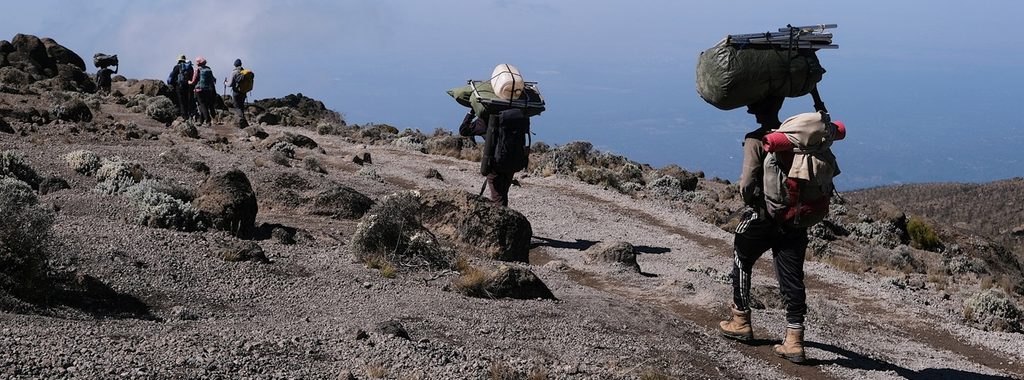
Climbing Mount Kilimanjaro requires a large support team. While guides lead climbers to the summit, porters carry equipment, transport supplies, and help establish camps throughout the expedition.
Without these workers, most commercial Kilimanjaro climbs would not be possible.
Unfortunately, porter mistreatment has been a longstanding problem in Tanzania’s trekking industry. Some workers receive inadequate wages, carry excessive loads, lack proper clothing, or are provided with insufficient food and shelter.
For travelers choosing a Kilimanjaro tour operator, ethical treatment of mountain crews should be an important consideration.
The good news is that organizations such as the Kilimanjaro Porters Assistance Project (KPAP) have established systems to monitor working conditions and encourage responsible practices.
Here’s what you should know about porter welfare before booking your climb.
The Considerations
1. The Role of Porters on Kilimanjaro
A typical Kilimanjaro expedition involves considerably more staff than clients.
Depending on the route, group size, and services provided, a climbing party may require several porters for each climber.
Porters carry tents, cooking equipment, food, drinking supplies, and other equipment between campsites.
They often depart camp after the climbers, dismantle equipment, carry supplies to the next campsite, and help prepare the camp before clients arrive.
The work is physically demanding, particularly at high altitude and in adverse weather.
Porters may spend several consecutive days carrying heavy loads while working in cold, wet, or windy conditions.
Despite their essential role, porters have historically been among the most economically vulnerable workers in Kilimanjaro tourism.
2. Common Porter Welfare Problems
Porter mistreatment can take several forms.
Inadequate Wages
Some operators pay workers poorly or use compensation arrangements that leave porters dependent on tips.
Low wages can make it difficult for workers to support their families, particularly when climbing employment is seasonal.
Excessive Loads
Porters may be required to carry loads that exceed appropriate limits.
Excessive weight increases physical strain and the risk of injury, especially on steep or uneven terrain.
Insufficient Food
Mountain crews require adequate nutrition to perform demanding physical work.
However, some operators provide limited food or inadequate meal portions.
Poor Clothing and Equipment
Kilimanjaro’s upper elevations can be extremely cold.
Porters without suitable jackets, footwear, gloves, and sleeping equipment may face unnecessary exposure to the elements.
Inadequate Shelter
Some workers are provided with overcrowded tents, insufficient sleeping arrangements, or poor protection from weather.
These conditions can compromise health, rest, and recovery during an expedition.
Responsible operators should address all of these concerns as part of their normal operations.
3. What Is the Kilimanjaro Porters Assistance Project?
The Kilimanjaro Porters Assistance Project, commonly known as KPAP, is an organization dedicated to improving the working conditions of porters on Mount Kilimanjaro.
KPAP works with the International Mountain Explorers Connection (IMEC) and supports responsible trekking practices.
One of its principal initiatives is the Partner for Responsible Travel program.
Participating operators agree to follow established porter welfare standards and allow independent monitoring of their expeditions.
These standards address wages, load limits, food, shelter, clothing, and other working conditions.
KPAP also provides educational programs and equipment-related support for mountain workers.
For travelers, KPAP participation offers a useful way to identify operators that have agreed to external oversight of porter welfare.
4. How KPAP Monitoring Works
One of the most valuable aspects of the KPAP program is its emphasis on monitoring rather than relying solely on company promises.
Participating operators agree to have their expeditions evaluated against established welfare standards.
Monitoring may involve independent observations, crew interviews, and examination of compensation and working conditions.
The objective is to determine whether operators follow the standards in practice.
This is important because almost every Kilimanjaro company claims to treat its porters fairly.
Without external monitoring, these claims can be difficult for prospective clients to verify.
However, KPAP participation should not be confused with a guarantee of perfect compliance on every expedition.
It also does not certify an operator’s overall climbing safety, guide competence, or customer service.
Its principal focus is porter welfare.
5. Porter Wages and Tipping
Porter compensation generally includes wages paid by the operator and gratuities provided by climbers.
Tipping is a longstanding practice on Kilimanjaro and represents an important source of income for mountain crews.
However, gratuities should not replace the operator’s responsibility to pay appropriate wages.
Responsible companies should explain how their crew members are compensated and provide transparent tipping guidance.
Climbers should understand:
- Whether guides, cooks, and porters receive wages from the company.
- How recommended gratuities are calculated.
- Whether tips are distributed directly or through a group system.
- How the company ensures fair distribution.
- Whether workers receive their full compensation.
Some companies provide clients with detailed tipping recommendations before departure.
Others offer limited information, leaving climbers uncertain about appropriate amounts.
Transparency helps protect workers and allows clients to budget accurately.
6. Porter Load Limits
Porters must carry substantial equipment to support a Kilimanjaro expedition.
However, their loads should remain within established limits.
Kilimanjaro porter welfare standards commonly use a maximum company-equipment load of 44 lb (20 kg) per porter, separate from the worker’s personal belongings.
Operators should weigh loads and organize equipment so that individual workers are not routinely overloaded.
This requires careful logistical planning.
Companies that provide extensive camping equipment, private toilets, and other amenities may need larger support teams.
A responsible operator should hire enough porters to transport the required supplies without exceeding appropriate load limits.
Reducing crew numbers to save money can create excessive workloads for those who remain.
7. Proper Clothing and Sleeping Conditions
Porters work in the same mountain environment as clients.
They encounter rain, freezing temperatures, strong winds, and high-altitude conditions.
Suitable clothing and sleeping arrangements are therefore essential.
Responsible operators should ensure that workers have appropriate footwear, insulated clothing, rain protection, and sleeping equipment.
They should also provide adequate shelter and sleeping space.
This is particularly important on the upper mountain, where nighttime temperatures can fall well below freezing.
Climbers should not assume that porters are adequately equipped simply because they appear comfortable during the day.
Working conditions must remain appropriate throughout the expedition.
8. Food and Drinking Water for Mountain Crews
Porters expend substantial energy carrying equipment and supplies.
They require sufficient food and safe drinking water to maintain their health and performance.
Responsible operators should provide regular meals with adequate calories and appropriate nutritional content.
Crew members should not have to rely on leftover client meals or purchase their own food during the expedition.
Food hygiene also matters.
Poor sanitation and unsafe drinking water can cause illness among both clients and mountain workers.
A professional expedition should maintain appropriate food preparation and water treatment practices for everyone involved.
9. Does Choosing a More Expensive Operator Guarantee Better Porter Treatment?
No.
Higher prices may provide an operator with more resources to pay wages, purchase equipment, and maintain suitable working conditions.
However, price alone does not establish ethical practices.
An expensive company may still have inadequate oversight of its mountain crews.
Likewise, a competitively priced local operator may maintain responsible labor standards.
The important question is how the company actually treats its workers.
KPAP participation, transparent compensation policies, appropriate staffing, and independent monitoring provide more useful evidence than price alone.
Travelers should evaluate porter welfare directly rather than assuming that luxury service automatically means ethical operations.
10. Local vs. International Operators
Porter welfare is not determined by whether a company is locally or internationally owned.
Both Tanzanian and overseas-owned businesses can operate responsibly.
Similarly, either type of company can fail to maintain appropriate labor standards.
Some international travel agencies subcontract their Kilimanjaro climbs to local ground operators.
In these arrangements, the company selling the trip may not directly employ the mountain crew.
Travelers should therefore ask who actually operates the expedition and who is responsible for porter wages and working conditions.
The relevant issue is accountability, not the nationality of the business owner.
11. How Climbers Can Support Ethical Porter Treatment
Travelers can help improve working conditions by choosing responsible operators and asking informed questions before booking.
Consider the following:
- Check whether the operator participates in KPAP’s Partner for Responsible Travel program.
- Ask how porters are paid and how tips are distributed.
- Confirm that porter loads are monitored.
- Ask whether workers receive suitable food, clothing, and shelter.
- Follow the operator’s recommended tipping procedures.
- Report concerning working conditions to the operator and, where appropriate, KPAP.
During the climb, treat mountain crew members with respect.
Porters are skilled workers performing demanding jobs. Their contribution deserves recognition and fair compensation.
Responsible tourism requires more than expressing appreciation. It requires supporting companies that maintain appropriate working conditions.
12. Environmental Responsibility on Kilimanjaro
Ethical trekking also involves protecting the mountain environment.
Kilimanjaro National Park contains sensitive ecosystems, from rainforest to alpine desert and the summit’s arctic environment.
Large numbers of visitors create challenges involving waste, sanitation, trail erosion, and resource use.
Responsible operators should follow park regulations and minimize their environmental impact.
Important practices include proper waste disposal, campsite sanitation, avoiding damage to vegetation, and following designated trails.
Companies should also educate clients about responsible behavior on the mountain.
Environmental protection and porter welfare are separate responsibilities, but both are important elements of responsible tourism.
Conclusion
Porters are essential to the Kilimanjaro climbing experience. Their work makes it possible for thousands of travelers to reach Africa’s highest summit every year.
However, the physical demands of their jobs make appropriate wages, equipment, food, shelter, and working conditions especially important.
Choosing an ethical Kilimanjaro operator is one way climbers can support better labor standards.
KPAP’s Partner for Responsible Travel program provides a useful framework for evaluating porter welfare, particularly because it incorporates independent monitoring.
Nevertheless, travelers should ask questions and understand how their chosen operator manages its mountain crews.
The best climbing experience should benefit everyone involved, including the people who make the expedition possible.
For a comparison of established companies and their services, see our guide to the Best Kilimanjaro Tour Operators.