Climbing Mount Kilimanjaro is a nontechnical trek, but that doesn’t mean it is without danger.
At 19,341 feet (5,895 meters), Kilimanjaro presents serious challenges related to altitude, weather, fatigue, and medical emergencies. Every year, thousands of people attempt the mountain, many with little or no previous high-altitude experience.
The quality of a tour operator’s safety procedures can make a substantial difference when problems arise.
However, not all companies provide the same level of medical training, equipment, staffing, or emergency support.
Understanding what constitutes an effective safety system can help you distinguish a reputable Kilimanjaro operator from one that offers only the minimum required services.
The Standards
1. Properly Trained Mountain Guides
The most important component of a Kilimanjaro safety system is the mountain guide.
Equipment can assist in an emergency, but it cannot replace a guide who recognizes a developing problem and responds appropriately.
Guides should understand altitude illness, hypothermia, dehydration, injuries, and other medical conditions that may occur during an expedition.
Wilderness First Responder (WFR) training is a particularly valuable qualification. These courses typically provide extensive instruction in patient assessment, emergency treatment, and evacuation decisions in remote environments.
However, not all Kilimanjaro guides hold WFR certification.
Some receive shorter wilderness first aid courses or training through local guiding organizations.
When evaluating operators, ask:
- What medical qualifications do your lead and assistant guides hold?
- How often do they receive refresher training?
- Are guides trained to recognize serious altitude illness?
- Do they practice emergency response procedures?
- Who has the authority to stop a climber’s ascent?
A reputable operator should provide clear answers rather than simply claiming its guides are highly experienced.
2. Regular Health Monitoring
Altitude illness can develop gradually, and climbers may not immediately recognize the warning signs.
For this reason, regular health assessments are an important part of responsible Kilimanjaro operations.
Many established operators conduct medical checks once or twice daily.
These assessments may include:
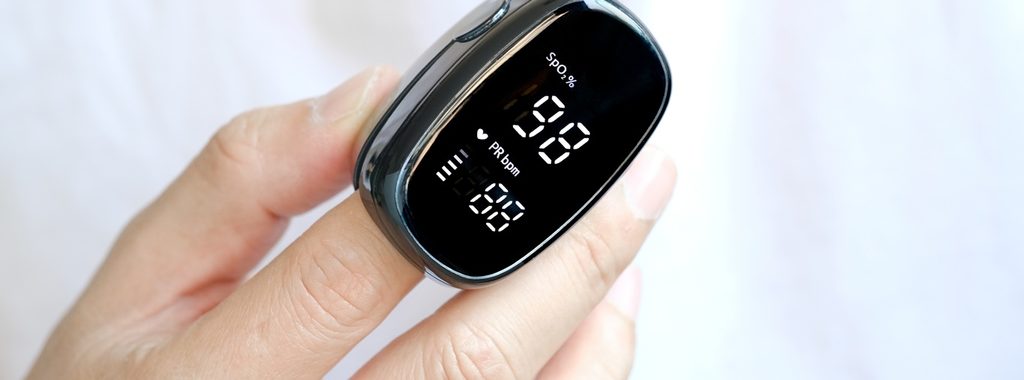
- Oxygen saturation measurements using a pulse oximeter.
- Heart rate monitoring.
- Questions about headaches, nausea, dizziness, and fatigue.
- Evaluation of appetite, sleep, and general well-being.
- Assessment of coordination, breathing, and other concerning symptoms when indicated.
The purpose is to identify potential problems early and monitor changes throughout the climb.
However, pulse oximetry has limitations.
Oxygen saturation naturally decreases as altitude increases, and readings vary considerably between individuals.
A low reading does not automatically mean a climber must descend. Likewise, a relatively high reading does not guarantee that someone is healthy.
Guides must consider symptoms, physical findings, altitude, and changes in the climber’s condition.
Medical monitoring should support clinical judgment, not replace it.
3. Emergency Oxygen
Bottled emergency oxygen is an important safety resource on Kilimanjaro.
When a climber develops serious altitude-related symptoms, supplemental oxygen can help improve oxygen availability while descent or evacuation is arranged.
Reputable operators should carry oxygen equipment appropriate for their group size and emergency procedures.
The equipment should include functioning regulators, delivery masks, and sufficient oxygen for the operator’s planned emergency response.
Guides must also know when and how to administer it.
However, emergency oxygen is not a substitute for descent.
For serious altitude illness, getting the affected person to a lower elevation is a critical intervention.
Oxygen may provide temporary support, but it should not be used to justify continuing an ascent when a climber is medically unfit to proceed.
Ask operators whether they carry emergency oxygen on every climb and how their guides are trained to use it.
4. Altitude Illness Recognition and Response
Altitude illness is among the most significant medical risks on Kilimanjaro.
The three principal conditions climbers should understand are acute mountain sickness (AMS), high-altitude pulmonary edema (HAPE), and high-altitude cerebral edema (HACE).
Acute Mountain Sickness
AMS commonly produces headaches, nausea, dizziness, fatigue, and other symptoms after ascent to higher elevations.
Mild cases may improve with rest and appropriate management.
However, climbers with worsening symptoms should not continue ascending.
High-Altitude Pulmonary Edema
HAPE involves fluid accumulation in the lungs and can cause breathlessness, reduced exercise tolerance, coughing, and eventually difficulty breathing at rest.
It can become life-threatening.
Suspected HAPE requires urgent medical attention, oxygen when available, and descent or evacuation.
High-Altitude Cerebral Edema
HACE involves serious neurological dysfunction associated with altitude illness.
Warning signs can include confusion, altered behavior, impaired coordination, and reduced consciousness.
HACE is a medical emergency requiring immediate action.
Guides should be trained to recognize these conditions and understand when further ascent is unsafe.
The ability to make timely descent decisions is more important than simply carrying medical equipment.
5. Appropriate Acclimatization Itineraries
The itinerary itself is an important safety consideration.
Kilimanjaro can be climbed in five days, but shorter routes provide limited time for the body to adapt to altitude.
Longer itineraries generally provide better opportunities for acclimatization.
Common options include seven-day Machame, eight-day Lemosho, and nine-day Northern Circuit climbs.
These routes allow climbers to ascend more gradually than the shortest itineraries.
However, route length alone does not guarantee safety.
Individual susceptibility to altitude illness varies, and even well-acclimatized climbers can develop serious symptoms.
A responsible operator should explain the acclimatization advantages of different itineraries and avoid guaranteeing summit success.
Be cautious of companies that promote very short climbs without adequately explaining the altitude-related trade-offs.
6. Adequate Guide-to-Climber Ratios
Staffing levels are another important part of expedition safety.
A climbing group should have enough qualified guides to monitor participants, manage different walking speeds, and respond when someone needs assistance.
For example, if a climber becomes ill and must descend, a guide may need to accompany that person while the rest of the group continues.
An expedition with insufficient guide coverage may struggle to manage these situations.
Some premium operators provide approximately one guide for every two climbers.
However, there is no single ratio that guarantees safety.
The qualifications of the guides, number of assistant guides, group size, and operator’s emergency procedures all matter.
Ask how many guides will accompany your group and what happens if one or more climbers must descend early.
7. Emergency Evacuation Procedures
Serious medical emergencies may require an assisted descent or evacuation from the mountain.
Kilimanjaro has designated evacuation routes, and ground rescue equipment may be used to transport climbers who cannot walk independently.
Helicopter evacuation may also be available under suitable conditions.
However, helicopter rescue is not guaranteed.
Weather, visibility, aircraft availability, landing conditions, and the patient’s location can affect whether an aircraft can respond.
A reputable operator must have an evacuation plan that does not depend entirely on helicopter assistance.
Ask the company:
- How are medical emergencies communicated to ground operations?
- Who coordinates an evacuation?
- What happens if a climber cannot walk?
- What ground evacuation equipment or assistance is available?
- How is the climber transferred to medical care?
- What role does travel insurance play?
A clear emergency plan is more valuable than a vague promise of helicopter rescue.
8. Communication Equipment
Reliable communication is essential when an emergency occurs.
Mountain guides may need to contact other crew members, park authorities, ground operations, or rescue providers.
Depending on the operator and route, communication equipment may include mobile phones, radios, or satellite communication devices.
However, mobile coverage is not reliable throughout every part of the mountain.
A company should understand the limitations of its communication systems and maintain appropriate backup procedures.
Ask how guides communicate during emergencies, particularly in remote areas or when the group becomes separated.
9. Portable Hyperbaric Chambers
Some Kilimanjaro operators carry portable hyperbaric chambers, sometimes called Gamow bags.
These devices temporarily increase the pressure surrounding a patient, simulating a descent to a lower altitude.
They can provide temporary relief from serious altitude illness when immediate descent is not possible.
However, portable hyperbaric chambers have limitations.
They require trained personnel, appropriate operation, and continued monitoring.
They also do not replace descent or definitive medical treatment.
For Kilimanjaro, where descent routes are generally available, prompt evacuation and supplemental oxygen are often more immediately relevant.
The absence of a portable hyperbaric chamber does not automatically indicate that an operator has inadequate safety standards.
The important question is whether the company has a complete and effective emergency response system.
10. Proper Equipment and Camp Management
Safety also depends on the quality and maintenance of mountain equipment.
Tents must withstand the weather conditions encountered on Kilimanjaro.
Cooking equipment should function reliably, and drinking water must be treated appropriately.
Crew members need suitable clothing, sleeping arrangements, and equipment to work safely at altitude.
Poorly maintained equipment can create unnecessary problems, particularly during heavy rain, strong winds, or cold weather.
Operators should inspect equipment regularly and replace items when necessary.
Food hygiene and sanitation are equally important.
Gastrointestinal illness can cause dehydration, weakness, and other complications that make climbing more difficult.
A professional operator should maintain clear standards for food preparation, drinking water treatment, and campsite hygiene.
11. Weather Monitoring and Route Decisions
Kilimanjaro’s weather can change rapidly.
Climbers may encounter heavy rain, snow, strong winds, freezing temperatures, and reduced visibility.
Although weather rarely prevents all summit attempts, severe conditions can make an ascent more dangerous.
Guides should monitor available forecasts, assess conditions on the mountain, and adjust plans when necessary.
This may involve changing departure times, modifying the pace, delaying an ascent when feasible, or turning around.
The ability to make conservative decisions when conditions deteriorate is an important sign of professional judgment.
No summit is worth an unreasonable risk.
12. Travel Insurance and Medical Evacuation Coverage
Travel insurance is an important part of preparing for Kilimanjaro.
Climbers should obtain coverage appropriate for trekking at elevations up to 19,341 feet (5,895 meters).
Policies should be checked for altitude limits, emergency medical treatment, evacuation, and other relevant exclusions.
Not all travel insurance policies cover high-altitude trekking.
Some impose elevation limits or exclude certain mountain activities.
Climbers should confirm coverage directly with their insurer before departure.
It is also important to understand that insurance coverage does not guarantee immediate rescue.
An evacuation still depends on available personnel, equipment, transportation, and local conditions.
Insurance provides financial protection, while the operator’s emergency procedures determine how the initial response is managed.
13. Summit Success Rates Are Not Safety Ratings
Many Kilimanjaro operators advertise high summit success rates.
These figures can provide useful information, but they should not be treated as direct measures of safety.
Companies may calculate success differently, use different route lengths, or report results from different time periods.
Some may count reaching the crater rim as a successful summit, while others require reaching Uhuru Peak.
Furthermore, a company that pressures climbers to continue despite concerning symptoms could potentially report a high success rate while maintaining poor safety practices.
A reputable operator should prioritize appropriate medical decisions over summit statistics.
When comparing success rates, ask how they are calculated and whether the figures are supported by reliable records.
Conclusion
Kilimanjaro safety depends on much more than carrying oxygen or employing experienced guides.
A strong safety system combines medical training, regular health monitoring, appropriate staffing, effective acclimatization itineraries, reliable equipment, and established emergency procedures.
The most important element is the ability to recognize problems and respond before they become life-threatening.
When evaluating Kilimanjaro operators, ask detailed questions about their safety practices rather than relying on broad marketing claims.
No company can eliminate the risks of high-altitude climbing. However, professional planning, qualified personnel, and sound judgment can reduce avoidable dangers.
For a comparison of established companies and their published services, see our guide to the Best Kilimanjaro Tour Operators.