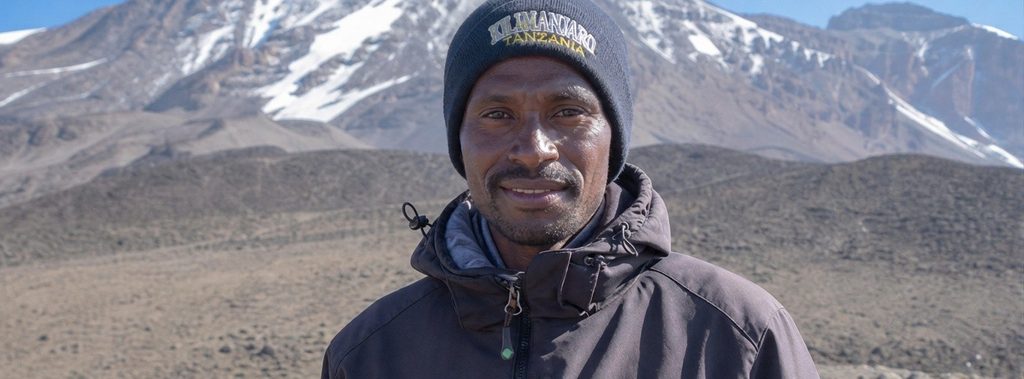
Your mountain guide is one of the most important people on your Kilimanjaro expedition.
A good guide does much more than lead climbers along a trail. Guides manage the pace, monitor health, coordinate the mountain crew, and make decisions that affect the safety and success of the entire group.
At 19,341 feet (5,895 meters), these responsibilities become especially important. Altitude illness, exhaustion, severe weather, and unexpected medical problems can turn an otherwise straightforward trek into a serious emergency.
But not all Kilimanjaro guides have the same training, experience, or level of competence.
Here are the qualities that distinguish an excellent Kilimanjaro guide.
The Qualities
1. Experience on Mount Kilimanjaro
Experience is one of the most valuable qualifications a mountain guide can possess.
Kilimanjaro guides develop their knowledge through repeated ascents, exposure to different weather conditions, and experience working with climbers of varying ages, abilities, and fitness levels.
An experienced guide should understand the mountain’s routes, campsites, terrain, weather patterns, and logistical challenges.
More importantly, they should recognize how climbers typically respond to altitude and fatigue throughout an expedition.
Some guides have completed hundreds of Kilimanjaro ascents over their careers.
However, the number of summits alone does not establish competence. A guide who has climbed the mountain 200 times is not necessarily more capable than one who has completed 100 ascents.
The quality of that experience matters.
A good guide learns from difficult situations, develops sound judgment, and understands when conditions require a change of plans.
2. Medical Training and First Aid Skills
Medical competence is among the most important qualities of a Kilimanjaro guide.
Although Kilimanjaro’s standard routes do not require technical climbing skills, the mountain’s extreme altitude creates potentially life-threatening medical risks.
Guides must recognize the symptoms of acute mountain sickness (AMS), high-altitude pulmonary edema (HAPE), and high-altitude cerebral edema (HACE).
They must also know how to respond to injuries, dehydration, hypothermia, and other medical emergencies.
Look for operators whose guides receive formal wilderness medical training.
Wilderness First Responder (WFR) certification is a particularly valuable qualification. WFR courses generally involve extensive instruction in patient assessment, emergency care, evacuation decisions, and medical treatment in remote environments.
However, a certificate alone is not enough.
Guides should receive periodic refresher training and practice responding to realistic mountain emergencies.
When evaluating a tour operator, ask what medical qualifications its guides hold and how frequently their training is renewed.
3. Ability to Recognize Altitude Illness
Altitude illness is one of the greatest safety concerns on Kilimanjaro.
As climbers ascend, the reduced availability of oxygen can produce headaches, nausea, dizziness, fatigue, and other symptoms.
Some symptoms are relatively mild. Others may indicate the development of serious altitude illness.
A competent guide must distinguish between expected discomfort and warning signs that require intervention.
Many reputable operators conduct regular health assessments, including pulse oximetry and symptom evaluations.
Pulse oximeters measure peripheral oxygen saturation, but the readings must be interpreted alongside symptoms, clinical observations, and the climber’s overall condition.
There is no single oxygen saturation number that reliably determines whether someone can safely continue climbing.
Guides must evaluate the complete situation rather than relying exclusively on equipment readings.
They should also recognize that altitude illness can affect experienced, physically fit climbers.
Fitness does not provide immunity from altitude sickness.
4. Sound Judgment and Decision-Making
A guide’s judgment becomes most important when something goes wrong.
Climbers may be determined to reach the summit despite worsening symptoms, exhaustion, or changing weather conditions.
A good guide must know when to continue, when to slow down, and when to turn around.
These decisions are not always easy.
Clients may have spent thousands of dollars and months preparing for their climb. Some have dreamed of reaching Kilimanjaro’s summit for years.
Understandably, they may resist abandoning their attempt.
However, a guide’s responsibility is to protect the climber’s health and safety, even when that means disappointing them.
The best guides are neither reckless nor unnecessarily conservative. They evaluate conditions carefully and make decisions based on the information available.
A guide who always pushes clients toward the summit is not necessarily a good guide.
Sometimes, the correct decision is to descend.
5. Effective Communication
Communication is essential during a Kilimanjaro expedition.
Guides must explain the daily itinerary, describe upcoming challenges, and provide clear instructions about pacing, clothing, hydration, and other practical matters.
They also need to communicate effectively with clients who may be tired, uncomfortable, anxious, or experiencing altitude-related symptoms.
English proficiency is particularly important for expeditions serving English-speaking travelers.
However, communication involves more than language skills.
Good guides listen carefully, answer questions honestly, and encourage climbers to report symptoms without embarrassment.
Clients should feel comfortable telling their guides when something is wrong.
This is especially important because climbers sometimes minimize symptoms out of fear that they will be prevented from continuing.
A guide who establishes trust early in the expedition may be better positioned to identify problems before they become serious.
6. Pacing and Group Management
Kilimanjaro is an endurance challenge, not a race.
One of the most important responsibilities of a guide is maintaining an appropriate walking pace.
Climbers are frequently encouraged to walk pole pole, a Swahili expression meaning “slowly, slowly.”
Moving at a controlled pace helps conserve energy and reduces unnecessary exertion.
However, slow walking alone does not prevent altitude sickness or guarantee successful acclimatization.
A good guide also understands that group members have different abilities.
Some climbers naturally walk faster than others. Some may need additional breaks or closer monitoring.
The operator should provide enough qualified guides to manage these differences safely.
When a group needs to separate, there should be sufficient staff to accompany climbers without leaving others inadequately supervised.
Guide-to-client ratios are therefore an important consideration when choosing an operator.
7. Leadership and Crew Management
A Kilimanjaro expedition involves considerably more than the clients and their guides.
The mountain crew typically includes assistant guides, cooks, waiters, and porters.
The lead guide is responsible for coordinating these team members and ensuring the expedition operates efficiently.
This includes managing daily departures, camp arrangements, equipment, meals, and communication between crew members.
Good leadership helps prevent small logistical problems from becoming larger disruptions.
It also affects the working environment for the mountain staff.
Professional guides should treat porters and other crew members respectfully, enforce appropriate working conditions, and address problems fairly.
A well-organized expedition generally reflects effective leadership behind the scenes.
8. Emergency Response and Evacuation
Even well-prepared expeditions can encounter emergencies.
A guide must understand how to respond when a climber becomes seriously ill or injured.
Depending on the situation, this may involve administering emergency oxygen, providing first aid, arranging an assisted descent, or coordinating an evacuation.
Kilimanjaro has designated evacuation routes, and helicopter evacuation may be available under suitable conditions.
However, helicopter rescue cannot be guaranteed. Weather, visibility, aircraft availability, and the patient’s location may affect whether an evacuation can take place.
Guides must be prepared to manage emergencies without assuming that a helicopter will arrive.
Ask operators how their guides communicate with ground teams and what procedures they follow when a climber cannot continue independently.
A clear evacuation plan is an important part of professional mountain guiding.
9. Professionalism and Personal Character
Technical knowledge and experience are essential, but a guide’s character also matters.
Climbers spend several days relying on their guides for information, assistance, and reassurance.
A good guide should be patient, attentive, dependable, and respectful.
They should remain composed during difficult situations and maintain a professional attitude throughout the expedition.
Encouragement is valuable, particularly during the final summit ascent when fatigue and discomfort can become significant.
However, encouragement should never become pressure to continue when doing so would be unsafe.
The best guides understand that their responsibility extends beyond helping clients reach the summit.
They are also responsible for helping clients return safely.
10. The Tour Operator Matters Too
Even an excellent guide may struggle to provide a high-quality experience without adequate support from the tour operator.
Companies are responsible for hiring qualified guides, providing training, maintaining equipment, establishing safety procedures, and supplying sufficient mountain staff.
They also determine guide-to-client ratios, crew compensation, and many of the operational standards that influence an expedition.
A good operator should support its guides rather than placing them under pressure to prioritize summit success over safety.
When comparing Kilimanjaro companies, ask about guide recruitment, medical training, equipment, and emergency procedures.
Also consider whether the company maintains long-term relationships with its mountain staff.
Guide quality and operator quality are closely connected.
Conclusion
A good Kilimanjaro guide combines mountain experience, medical knowledge, sound judgment, leadership, and effective communication.
The best guides understand that reaching the summit is only one part of a successful expedition.
Their responsibilities include recognizing altitude illness, managing the group, responding to emergencies, and making difficult decisions when necessary.
When choosing a Kilimanjaro tour operator, don’t rely solely on claims about experienced guides or high summit success rates.
Ask specific questions about guide qualifications, medical training, staffing, and emergency procedures.
Ultimately, you want a guide who knows how to help you reach the summit, but also knows when you should not.
For companies that emphasize experienced guides, professional training, and established safety procedures, see our comparison of the Best Kilimanjaro Tour Operators.